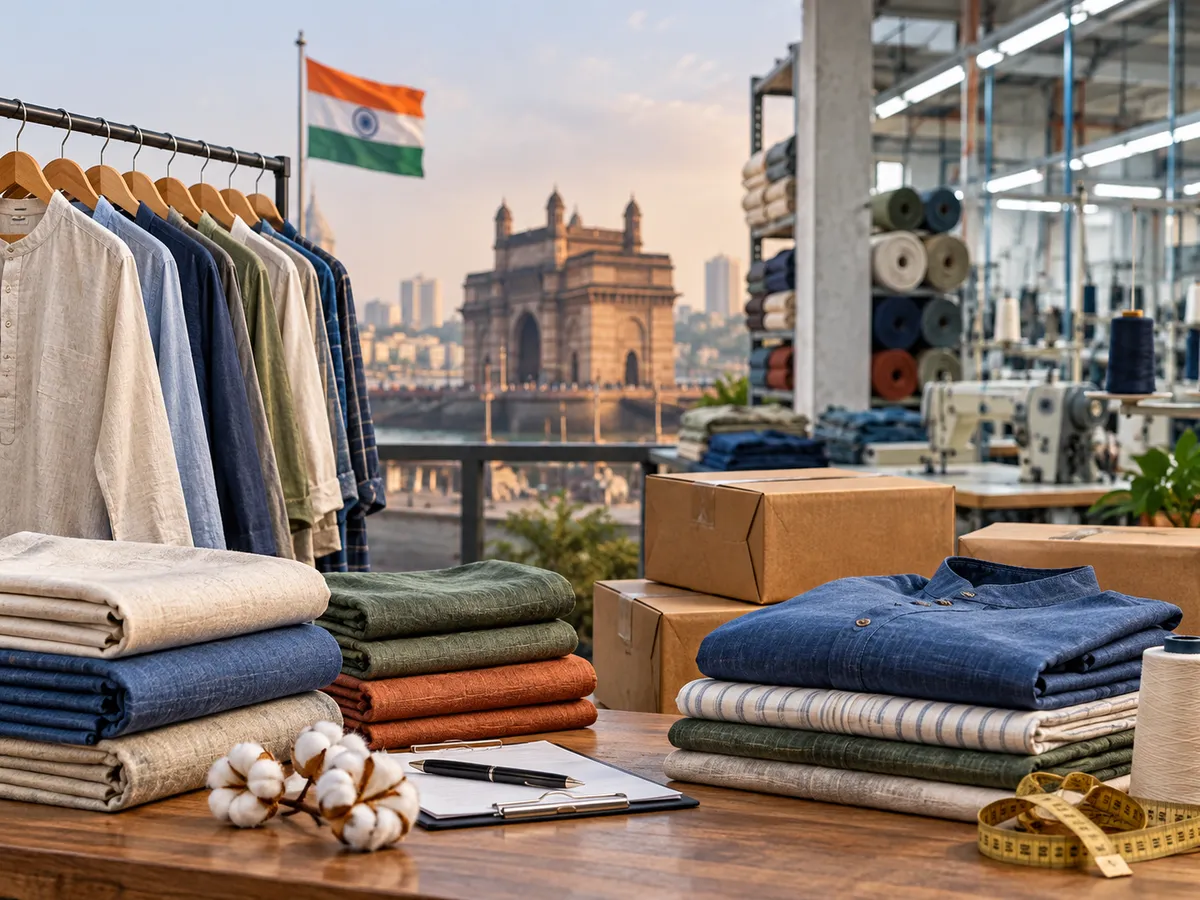
Retailers sourcing wholesale clothing from India are stepping into one of the largest and most fragmented manufacturing bases in the world. The country’s textile and apparel sector employs over 45 million people and contributes close to 2% of national GDP, spread across thousands of small factories rather than a handful of large ones. That scale is an advantage for retailers who know how to navigate it, and a maze for retailers who don’t. This guide covers where to look, how to verify a supplier is genuine, what to ask before you order, and how to match a supplier to the customer you’re actually stocking for.
What “Wholesale Clothing Supplier” Actually Means in India
Not every business that calls itself a wholesale clothing supplier in India is making the garments it sells. Three distinct roles get lumped under the same label:
- Manufacturers cut, stitch, and finish garments in their own or a contracted facility. They control fabric sourcing, quality, and turnaround.
- Traders or vendors buy finished stock from manufacturers and resell it, usually at a markup, sometimes across multiple brands in one catalog.
- Manufacturer-exporters run production and also handle the paperwork for shipping overseas, which matters if you’re importing rather than buying domestically.
Comparing wholesale clothing manufacturers in India against wholesale clothing vendors in India, the manufacturer route generally gives tighter pricing and more control over fabric and fit, since there’s no reseller margin stacked on top. The trade-off is that manufacturers are often less flexible on small, mixed orders than a trader holding ready stock.
Where to Find Wholesale Clothing Suppliers in India
B2B Marketplaces and Directories
Platforms like IndiaMART and TradeIndia list thousands of garment sellers, sorted by category and location, and are usually the first stop for retailers researching bulk clothing suppliers in India. They’re useful for casting a wide net, but listings mix manufacturers, traders, and dropship resellers without always saying which is which, so treat them as a starting point for outreach, not a final shortlist.
India’s Regional Textile Hubs
Sourcing decisions in India are still shaped heavily by geography. Tirupur and Ludhiana are known for knitwear and T-shirts, Surat for man-made fabrics, and Kerala’s Kannur district for a linen and handloom tradition that goes back generations. Kerala’s handloom heritage is concentrated specifically in the state’s northern belt, where the industry has historically specialized in home linen and softer weaves rather than the finer dress varieties produced further south. By one industry estimate, Kerala handloom employment data puts the sector’s workforce at roughly 1.75 lakh people, second only to coir among the state’s traditional industries. Manufacturers drawing on Kannur’s textile roots tend to have genuine fabric expertise rather than a generic supply chain bolted onto a trading business.
Manufacturer Websites and Direct Catalogs
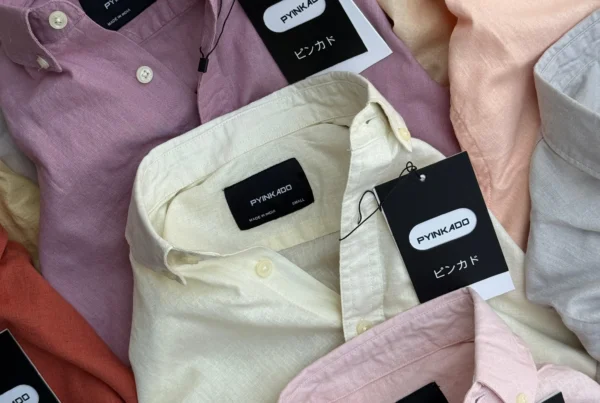
A growing number of Indian manufacturers publish their full range online instead of routing every enquiry through a marketplace listing. Pyinkado’s shirt collections page is a working example: tens of categories, from checks to embroidery, browsable without an account or a minimum order just to view. If a manufacturer’s site shows real product photography and specific fabric details rather than stock images, that’s a reasonable signal you’re dealing with an actual factory rather than a reseller with a website.
How to Verify a Wholesale Clothing Supplier Is Genuine
Anyone can claim to be a manufacturer in a WhatsApp message. Before committing to an order, run three checks.
GST registration. A supplier turning over more than ₹40 lakh a year in most states is legally required to be GST-registered, and every genuine wholesale invoice should carry a GSTIN. You can verify GSTIN online for free in under a minute using the government’s own search tool, confirming the registered legal name matches the name on your quote and that the status shows active, not cancelled.
MSME or Udyam status. Most legitimate small and mid-sized Indian manufacturers register on the government’s Udyam MSME registration portal, which is free and takes minutes. Retail and wholesale traders have themselves been eligible for Udyam registration since a 2021 policy change, so seeing it on either side of a deal is a good sign, though its absence alone isn’t automatically disqualifying for a small proprietorship.
Export credentials, if you’re buying from outside India. International buyers should ask whether the supplier holds a valid Importer Exporter Code. Any business legally exporting from India needs to apply for an IEC through the Directorate General of Foreign Trade, and a supplier who can’t produce one has no legal route to ship internationally, whatever their catalog promises.
What to Ask Before You Place a Wholesale Clothing Order
Search results for wholesale clothing suppliers in India with price lists attached are common, but treat any blanket price sheet with caution. Genuine manufacturers price by fabric, minimum order quantity, and finishing, not a flat per-piece rate across styles. Before you commit:
- What’s the MOQ, and is it per style or per order? A 100-piece MOQ per style is a very different commitment than 100 pieces spread across ten styles and sizes. Newer boutiques testing a category should specifically ask about low-MOQ or first-order terms rather than assuming the advertised minimum is fixed.
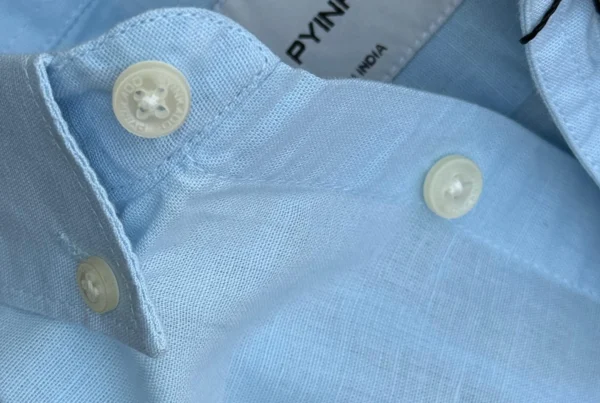
- What’s the exact fabric composition? “Good quality linen” is not a specification. Pyinkado’s piece on its seven linen blends is a useful reference for the kind of detail worth asking for: pure linen, cotton-linen, and lyocell-linen change both feel and price point.
- Can you order a sample set first? A small trial order before a bulk commitment is standard practice, and a manufacturer refusing one is worth a second look.
- What does the invoice look like? A proper GST invoice carrying the registered legal name, not a handwritten note or a screenshot, protects your input tax credit and your paper trail if a dispute comes up later.
Matching Your Supplier to the Gen Z Menswear Buyer
If your store serves the 16 to 30 age bracket, sourcing decisions need to follow that customer’s habits, not last decade’s playbook. Gen Z is set to account for roughly half of India’s fashion, footwear, and accessories spending by 2030, according to one recent Gen Z spending report, and this cohort’s average purchase price already runs noticeably lower than millennials’ on the same fashion platforms, pointing toward value-priced, trend-forward stock over premium branded lines.
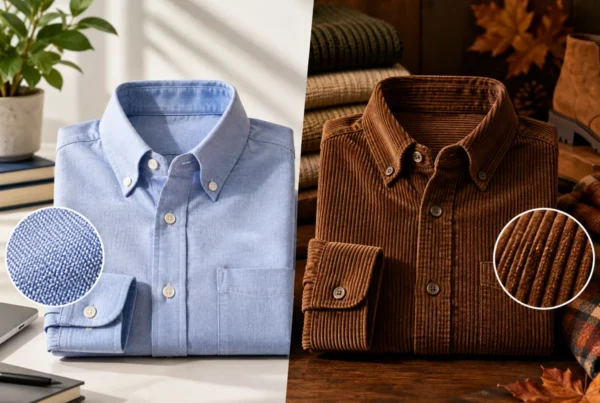
Practically, that means looking past generic listings of wholesale mens clothing suppliers in India toward manufacturers who organize their range by the categories that actually move: structured basics like an Oxford shirt collection for smart-casual, and a denim shirt collection for the streetwear crossover this age group favors. Once the stock is in, how you present it matters almost as much as what you bought. Placement, cross-merchandising complete looks instead of single garments, and labelling fabric blends on the floor are covered in more detail in Pyinkado’s piece on merchandising your linen range, and the same logic applies across denim and cotton lines too.
Why Kerala Manufacturers Are Worth a Look for Menswear Retailers
Kerala doesn’t come up as often as Tirupur or Surat in most searches for wholesale garment manufacturers in India, which is partly why retailers who look there find margin room competitors have already priced out of the bigger hubs. Pyinkado, based across Kochi and Kannur, builds on that regional linen and cotton expertise while designing specifically for the 16 to 30 buyer rather than adapting an older catalog. Customers reviewing the finished product have called out fit and stitching quality directly. One wrote that the fabric felt soft and comfortable, with a fit he described as perfect, wearing the shirts both to the office and casually. That matters to a retailer because it’s the end customer’s experience that drives repeat footfall, not just the wholesale rate on your invoice.
If you’re ready to move from research to an actual order, the fastest way to test any supplier relationship, Pyinkado included, is a small first order rather than a large speculative one. Retailers can become a Pyinkado retailer directly through the site’s contact form, by phone, or by WhatsApp, with a stated response time of 24 hours.
Frequently Asked Questions
1. How do I find wholesale clothing suppliers in India if I’ve never sourced from the country before?
Start with B2B marketplaces like IndiaMART or TradeIndia to identify candidates, then narrow to manufacturers whose websites show real product photography and specific fabric details. Verify GST and, where relevant, MSME registration before placing any order.
2. What is a reasonable minimum order quantity for a first wholesale order?
It varies by manufacturer and category, but ask specifically whether the MOQ applies per style or across your total order, and whether new-buyer terms differ from repeat-buyer terms. Many manufacturers will accommodate smaller test orders for a first-time relationship.
3. Do I need an Importer Exporter Code to buy wholesale clothing from an Indian manufacturer?
Only if you’re importing the goods into another country yourself. The IEC requirement applies to the party doing the exporting or importing under Indian law, so ask your chosen supplier whether they hold one if you need them to handle international shipping.
4. How can I tell if a wholesale clothing supplier in India is a manufacturer or a reseller?
Ask directly, and ask for production details a reseller wouldn’t know, like fabric sourcing or in-house finishing steps. A supplier who can’t answer basic fabric composition or production timeline questions is more likely reselling stock than making it.